


Bali Mangrove Conservation Experience
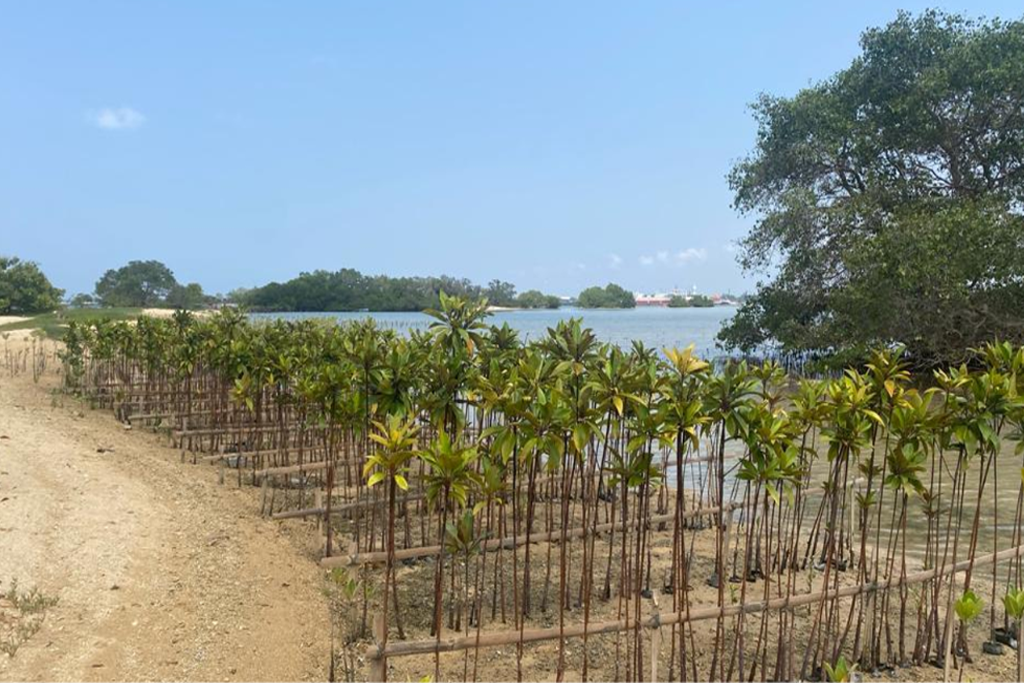
Learn about the Mangrove Forest in Bali and be a part of local community’s reforestation efforts to save Bali’ mangroves.
Mangrove is a plant that grows mainly along the coast lines and tidal rivers with equatorial climates. Mangrove shrubs and trees are salt tolerant shrubs or trees. They have special salt-filtration system which allow them to tolerate salt water that would kill most plants.
The presence of mangroves is often overlooked and underrated. The mangroves actually have a vital role in nature and human lives. They act as barriers to waves and storms for the coastal areas, provide habitat and shelter to sea birds and nursery for fish as well as other marine fauna. Mangrove forests also capture CO2 from the atmosphere and store it in their roots, slowing down the effect of climate change.
Indonesia, which consists of over 17,000 islands including Bali, is home to an estimated 23% of the world’s mangroves (3.36 million hectares per KLHK, 2021), the largest extent of global mangrove ecosystems, and is the most diverse with 92 mangrove species. Unfortunately, Indonesia experiences significant mangrove loss each year. The majority of loss is caused by mangroves being converted into aquaculture ponds (mostly for shrimps) and coastal development for urban expansion. The government has expanded Marine Protected Areas to over 23 million hectares in the effort of reducing the conversion of the mangrove forests. But there are still so much more to do to conserve the Mangrove Forest.